
ARAS Connections: Image and Archetype - 2025 Issue 4
Welcome
The final edition of ARAS Connections for 2025 features the work of four different individuals exploring the intersection in psyche of the inner and outer worlds. Their foci move from the micro to macrocosm in words and images with studies as far-ranging as the great expanse of the cosmos to cultural complexes in America to the art and mythology of Japan to the relationship between time and eternity. Here are the subjects and authors of the four different articles:
1.The intersection in psyche of the inner and outer cosmos through art and science in Painting at the Intersection of Psyche, Science, and Mystery: A Journey into the Cosmos through an Inner Landscape by Johanna Baruch
2. The intersection in psyche of the inner and outer worlds of individuals and groups through social and political relationships in Thomas Singer’s Field Guide to American Cultural Complexes: The Battleground of the Splintered American Psyche
3. The intersection in psyche of the inner and outer worlds through the art, mythology and culture of Japan in New Additions to the ARAS Permanent Collection by Nanae Takenaka
4. The intersection in psyche of the inner and outer worlds of time and eternity in the work of Joseph Henderson in On Depth Psychology, Time and Eternity
This is truly a moveable feast worthy of the Holiday Season.
With warm good wishes,
Tom Singer
Painting at the Intersection of Psyche, Science, and Mystery: A Journey into the Cosmos through an Inner Landscape

This article is an exploration into the mystery of the creative process and the transformative power of art. I’ll be speaking from my own intersection - of looking up into the infinite cosmos while diving down into my own inner worlds. And I’ll be using the medium of paint as my language. But I hope this will speak to where you stand at your own intersections of creativity.
You’ll be seeing many images, paintings from artists across time, and photographs from our amazing space telescopes. We’ll study a little of the science behind our space discoveries. We’ll go into the artist’s studio to explore the alchemy of painting. And in the last part, I’ll show some images of my own work.
For me, the materiality of paint – its feel, its texture, its color – all contain an innate vitality. The artist has a relationship with it. Establishes a partnership. It’s the artists job to allow paint to take its own nature while expressing ourselves through directing and guiding it along.
I begin my process by looking at photographs of deep space. I look and open myself up till one hits me viscerally. It goes beyond words, or even thoughts. It’s a primal relationship between my own inner cosmos while looking at the great universe all around us.
When an artist stands before a blank canvas or panel, it’s that terrifying and thrilling moment of putting the first stroke on nothingness that puts us, and the painting on a completely unknown path. That canvas is a receiver, and a vessel, yet it also responds back. Together we create a new life.
Read Painting at the Intersection of Psyche, Science, and Mystery in its entirety here.
New Release: A Field Guide to American Cultural Complexes: The Battleground of the Splintered American Psyche by Thomas Singer

Many Americans today feel overwhelmed and overburdened by the relentless flood of conflicting narratives surging through society.
Every headline, opinion page, or dinner-table discussion seems to throb with urgency, distortion, and division. The more implausible the story, the more powerfully it grips the psyche. We are living in a crazy-making environment.
Here is an unsettling truth: much of what we are reacting to isn’t coming from real people at all. It comes instead from cultural complexes—impersonal forces made up of raw emotion, inherited trauma, and mythic stories. These complexes often masquerade as individuals, with people acting like puppet-like mouthpieces of their narratives.
Cultural complexes are composed of powerful emotions, selective memories, symbolic images, simplistic thoughts, and stereotyped behaviors. They function like splinter personalities of the American psyche—subpersonalities that walk and talk as if human, but in reality are psychic fragments possessing individuals and groups like mutating viruses. One of the greatest challenges we face is how to remain a real person—how not to be absorbed into a cultural complex as our primary identity.
These complexes are autonomous. They don’t ask for conscious permission to take hold of us. They possess. They trigger. They distort. Most destructively, they do not dialogue. They do not compromise. They clash like mythic titans in the group and individual psyche, vying for the soul of the individual and the soul of the nation. They are everywhere: in our institutions, in our media, in our homes—and inside us.
Featuring more than 100 symbolic images and text, A Field Guide to American Cultural Complexes: The Battleground of the Splintered American Psyche identifies the common species of cultural complexes that populate the American political, social, and psychological landscape. When triggered, these complexes behave like nuclear-powered sources of potent emotion, black-and-white thinking, self-reinforcing memory, and stereotypical behavior.
Thomas Singer, MD is a psychiatrist, Jungian psychoanalyst, and author of many books and articles. He is the editor of the seven volume Cultural Complex Series and the three volume series of Ancient Greece, Modern Psyche. He has served on the Board of ARAS (The Archives for Research in Archetypal Symbolism) for many years and edits ARAS Connections.
New Additions to the ARAS Permanent Collection!
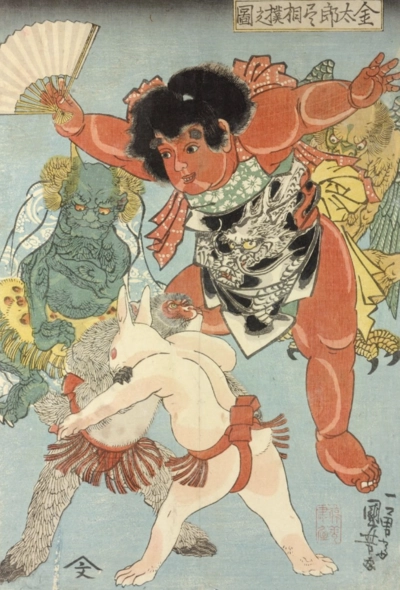
We are thrilled to present the first three in a series of new archetypal commentaries written by Dr. Nanae Takenaka, who has been generously contributing to our archive while in the United States from Japan for a year. These commentaries draw deeply on her expertise in Japanese folklore, mythology, and culture, offering rich insight into the archetypes in these images. We are always working to expand the reach of our archive, and having additions of this scholarly caliber is incredibly meaningful to us. We hope you enjoy reading through them here or encountering them within our archive!
View the images and read the archetypal commentaries here.
On Depth Psychology, Time and Eternity
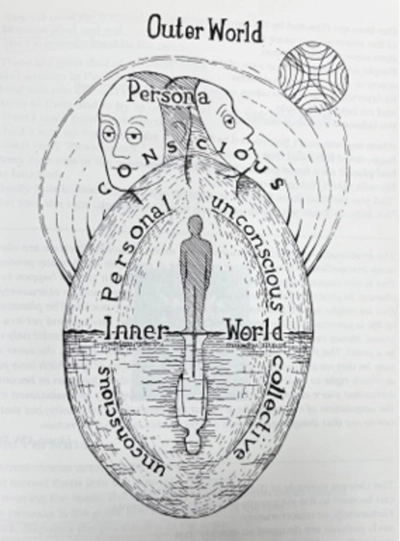
A summary of Joseph L. Henderson's April 4, 1993 lecture presentation before The San Francisco Friends of ARAS, in the symposium on “Time and Eternity.”
Dr. Henderson's presentation was a part of a larger conference sponsored by the San Francisco Friends of ARAS on the topic of ‘Time and Eternity.’ Other presenters in this conference included Michael Flanagin, Tanya Wilkinson, Minou Alexander, Alan Ruskin, Tina Stromsted, and Richard Stein.
Dr. Henderson chose, as his focus, the timelessness of the collective unconscious and the historical development of the idea of the collective unconscious. He began his presentation with an anecdote.
"Jung once said to a young psychiatrist who came to him for instruction ‘Can you accept that the unconscious has a double bottom?’ Presumably this refers to the personal unconscious and the collective unconscious which Jung saw as lying one beneath the other as a source of psychic energy." (JLH) Henderson then went on to briefly trace the history of the discovery of the unconscious.
Henderson spoke of the 18th and 19th century German contributors such as von Hartmann, Leibnitz, and Schopenhauer who called our attention to unconscious memories, unconscious perception, and unconscious ideas. He also acknowledged the contributions of Shakespeare, Rousseau, Schiller, and Shelly. Then in a refreshing twist Henderson pointed out that the word "unconscious" was originally used as an adjective to describe memories, perceptions etc. and only later began to be used as a noun - as THE unconscious.
He said, "A recognition of the unconscious not as an adjective but as a noun then challenged the strong rationalist convictions of the 18th century as represented by John Locke who said that there was nothing in the psyche that had not been placed there by a conscious mind - a mind that was an empty slate on which nothing had been written." (JLH)
Read On Depth Psychology, Time and Eternity in its entirety.
Contents
- Welcome
- Painting at the Intersection of Psyche, Science, and Mystery: A Journey into the Cosmos through an Inner Landscape
- New Release: A Field Guide to American Cultural Complexes: The Battleground of the Splintered American Psyche by Thomas Singer
- New Additions to the ARAS Permanent Collection!
- On Depth Psychology, Time and Eternity
Become a Member of ARAS!
Your completely tax-deductible membership gives you:
- 18,000+ images and commentaries spanning human eras and cultures
- Our quarterly newsletter ARAS Connections: Image and Archetype
- Access to the Artstor Digital Library
Full access to the entire contents of the three magnificent ARAS books: An Encyclopedia of Archetypal Symbolism, The Body, and The Book of Symbols.
Join us on Patreon for more exclusive ARAS material:
At ARAS, we're dedicated to bringing meaning to the images that are all around us — through education, art-making, research, and public engagement. If that mission speaks to you, we'd love to have you alongside us. Join us on Patreon and support the work that makes it all possible. And we'll make sure it's worth your while.
Join us at Patreon.com/arasarchive and select Membership Options. From there you can scroll through the 6 options for membership - starting as low as $3/month.
We Value Your Ideas
As our newsletter grows to cover both the ARAS archive and the broad world of art and psyche, we're eager to have your suggestions and thoughts on how to improve it. Please send your comments to info@aras.org. We look forward to your input and will reply to every message.
Subscribe
If you're not already a subscriber and would like to receive subsequent issues of this newsletter by email at no cost, e-mail us at newsletter@aras.org.