ARAS Connections: Image and Archetype - 2026 Issue 1
Welcome
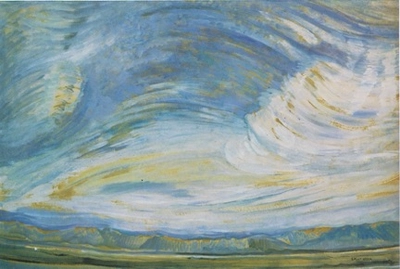
One way to think about the two fine contributions (plus one) to this edition of ARAS Connections is that they are invitations to learn more about their subjects. Each introduces us to the life work of an extraordinary individual. Dr. Monika Wikman does a fine job of presenting the life and painting of Emily Carr, a truly remarkable Canadian woman who explored and embraced the indigenous peoples of the Northwest long before it became fashionable. Carr plunged into the indigenous way of life and found through painting her own access to the lumen natura--the light in nature that shines with soul and spirit. The paintings in this essay are stunning.
The second essay in this edition of ARAS Connections features the summary of a 1994 lecture by Joseph Henderson that was hosted by the San Francisco Friends of ARAS. This article was edited and its images curated by Kako Ueda and Stephanie Fariss. It is a remarkable condensation of his life's work on the hero and initiation. By focusing on two mythologems from ancient cultures, Henderson differentiates the roles of the hero and the initiate in both women and men. Rather synchronistically, I have been exploring AI as a potential tool in helping bring to life and contemporary relevance the wisdom of our ancestors in a time of deep crisis. Using Artificial Intelligence I created a video of Joseph Henderson speaking about the myths of the hero and initiate as they pertain to the different phases of development in both the individual and culture. We might think of this video as Henderson's elegy from the dead to the living as he continues to explore the themes of his 1994 San Francisco Friends of ARAS lecture.
Lumena Natura, The Light in Nature: The Life and Work of Canadian Painter and Author, Emily Carr
Preface
A Jungian analyst, Gustav Dreifuss recalls Jung’s response when asked, “What is the meaning or value of consciousness?”
"I vividly remember Jung’s answer with regard to the meaning of consciousness. Then Jung added: But a still bigger problem is unconsciousness. How can man time and again become unconscious in order to unite with the depth of his soul and drink from the deepest well?"
Emily Carr’s life and work privately answered this paradoxical question. Via her paintings, and her writings, this presentation takes a look into the wilderness of being she embodied where this became so.
Introduction
Out of the Canadian West Coast culture of the late 1800s sprang a woman artist whose individuation brought forth in literature and painting the intimate numinous presence of psyche in nature, the lumena natura present in Canadian forests, seascapes, and indigenous villages, peoples, and totems of the time.
Emily Carr was born December 13, 1871 in Victoria, British Columbia. Carr spent most of her life on Vancouver Island, but she also studied for three years at the California School of Design in San Francisco (1890-1893); for five years at the Westminster School of Art in London, England (1899-1904), where she also attended sketching classes at St. Ives in Cornwall, at the Meadows Studio, Bushey; and at the Académie Colarossi in Paris for one year (1910). Returning home in between to her beloved British Columbia, she lived out the last of her years and died March 2, 1945, at the age of 73.
The living cornerstone at the center of her life and work is the intimate relationship Carr shared with the primeval forests of Canada, and her forays for decades into the remote indigenous people’s villages of Canada and Alaska. Throughout the 1930s she specialized in scenes from the lives and rituals of the Native Americans. Living among the Native Americans to research her subjects, she eventually incorporated totem poles and other artifacts of Indian culture into her Expressionist paintings. Her life and work were infused by an ever-deepening relationship with the embodied natural world.
For the major portion of her life, her work was not well received and she had to supplement her income by farming, running a boarding house, and making pottery. She suffered a terrible long depression during which she stopped painting for years, picking it up again in her late 50s. Yet by the time she died, Carr left behind thousands of paintings and sketches, numerous journals, an autobiography, and many award-winning books. She is considered by Canada today to be a national treasure.
Regarding her art career, she considered these teachers and influences of most importance: In France she studied with Frances Hodgkins and Phelan Gibb. The post-Impressionists –Picasso and Matisse and others--were at their peak in France at the time and the influence of post-Impressionism and Fauvism made a profound enduring impact upon her vision and her work. The painter Lawren Harris later in life was her true friend and his encouragement of her work brought her through a deep decade of depression and opened her up to new explorations that became the signature of her later and greatest works.
The Primordial Influences Upon Her Artwork
In her first foray into indigenous villages, she spent three months with the native tribes at Uclulet on the western shores of Vancouver Island, where her sister was stationed as a missionary.
Initiation: Two Mythologems
A summary of Joseph L. Henderson's September 25, 1994 lecture presentation before The San Francisco Friends of ARAS entitled “The Mythologem: Initiation in Gilgamesh and at Eleusis.”
In their 1941 collaborative publication, Essays on a Science of Mythology, Carl Jung and the Hungarian classical scholar, Carl Kerenyi mapped out the core concepts of archetypal research. These include the spontaneous recurrence of mythological images and themes in the dreams and fantasies of modern persons; the identification of such affectively laden images as archetypes; the multiplicity of forms of each archetype; the bipolar meanings attributable to each archetype; and the importance of the mythologem as the structure residing behind each of the different classes of myths (i.e., the mythologems of the trickster, hero, initiate, child, mother, etc.).
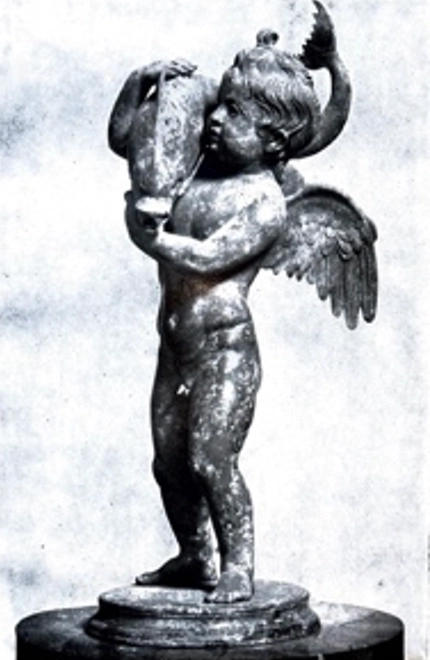
Example of a child archetype:
In Dr. Henderson's slide and lecture presentation, he demonstrated the mythologems of "the hero" and "initiation" in the epic of Gilgamesh and the mythologem of "initiation" in the myth of Demeter and Persephone as re-enacted in the Eleusinian Mysteries. In doing so, he addressed "the importance of initiation as it emerges from the myth of the hero."
Dr. Henderson began by reminding us that, "In studying a particular mythologem, we look first for the image or images by which it can be seen - by which it can be partially known." (JLH) For this aspect of the study, the Archive for Research of Archetypal Symbolism (ARAS), with its thousands of images and symbolic descriptions of artwork, from cultures all around the world, is an invaluable resource.
Dr. Henderson drew us into the mythologem of the hero - who overcomes the forces of darkness to win the treasure hard to attain - by recalling the Babylonian epic of Gilgamesh and showing us an ARAS slide of Gilgamesh and Enkidu slaying Humbaba. In this epic, Gilgamesh and his dear friend Enkidu engage in all manner of heroic acts of strength and courage. The friendship they form is said to be a metaphor of ego and shadow coming to terms with each other. Together they slay Humbaba, described by Dr. Henderson as symbolic of the negative power of the Great Mother.
Joseph Henderson via AI
Using Artificial Intelligence Tom Singer created a video of Joseph Henderson speaking about the myths of the hero and initiate as they pertain to the different phases of development in both the individual and culture. We might think of this video as Henderson's elegy from the dead to the living as he continues to explore the themes of his 1994 San Francisco Friends of ARAS lecture.
Contents
Become a Member of ARAS!
Your completely tax-deductible membership gives you:
- 18,000+ images and commentaries spanning human eras and cultures
- Our quarterly newsletter ARAS Connections: Image and Archetype
- Access to the Artstor Digital Library
Full access to the entire contents of the three magnificent ARAS books: An Encyclopedia of Archetypal Symbolism, The Body, and The Book of Symbols.
Join us on Patreon for more exclusive ARAS material:
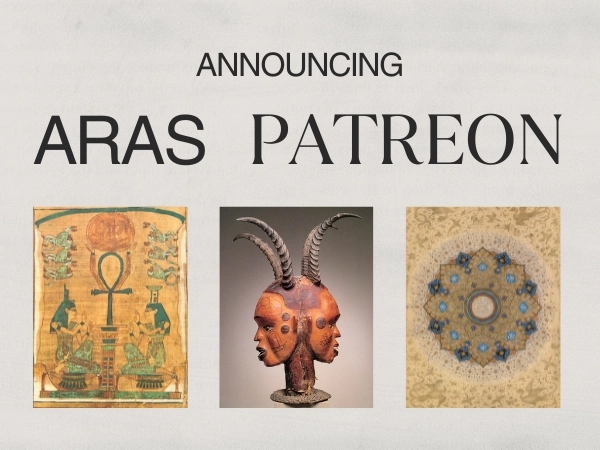
At ARAS, we're dedicated to bringing meaning to the images that are all around us — through education, art-making, research, and public engagement. If that mission speaks to you, we'd love to have you alongside us. Join us on Patreon and support the work that makes it all possible. And we'll make sure it's worth your while.
Join us at Patreon.com/arasarchive and select Membership Options. From there you can scroll through the 6 options for membership - starting as low as $3/month.
We Value Your Ideas
As our newsletter grows to cover both the ARAS archive and the broad world of art and psyche, we're eager to have your suggestions and thoughts on how to improve it. Please send your comments to info@aras.org. We look forward to your input and will reply to every message.
Subscribe
If you're not already a subscriber and would like to receive subsequent issues of this newsletter by email at no cost, e-mail us at newsletter@aras.org.