ARAS Connections: Image and Archetype - 2026 Issue 2
Welcome
A Shout Out for Multiculturalism
ARAS is nothing if it is not multicultural. Yet we live in a time when multiculturalism and diversity are under attack from the drift toward ethnocentrism and nationalist fundamentalism. Being "woke" also took its toll on the world because of its own tendency toward self-righteousness. God knows, we need less self-righteousness from either the left or the right, progressive or conservative — and we need to hear from the silent majority that has had enough of the divisiveness and polarization that are byproducts of the narcissistic belief that one's own group is the only one worthy of compassion and understanding.
And what does that little rant have to do with ARAS Connections? Everything — because this issue affirms that embracing the differences between cultures, their mythologies, and symbolic images is the only way forward that offers the possibility of global wholeness in such fragmented times. I find this issue of ARAS Connections hopeful as we celebrate cultures as diverse as European, Middle Eastern, and Far Eastern. This edition is a celebration of the ongoing feast that began with Olga Fröbe-Kapteyn's hosting of multicultural explorations at Eranos. Her own paintings are honored in a new book, The Art of the Self: The Blue Book of Eranos Founder Olga Fröbe-Kapteyn. Our multicultural journey continues with an in-depth essay about Italian filmmaker Michelangelo Antonioni by Gary D. Astrachan. We proceed with images and commentary about new additions to the Japanese section of the ARAS’ Permanent Collection by Nanae Takenaka. And finally, paintings by Rochelle Shicoff explore the rich traditions of Muslim women.
Invaluable editorial contributions to this edition of ARAS Connections have been made by Allison Tuzo, Michael Flanagin, and Jeffrey Moulton Benevedes.
In loving memory of Deborah Wesley
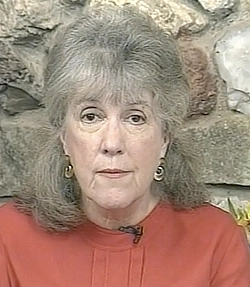
With the passing of Deborah Wesley of Los Angeles in December, 2025 at the age of 95, National ARAS lost one of its most devoted and gifted longtime Board members. Over the years, Deborah’s contributions were both enormous and selfless. She represented the finest of what ARAS values most highly: curiosity, integrity, and a passionate devotion to symbolic imagery in all its manifestations.
Deborah Wesley was the kind of person every healthy organization needs. She was often the voice of dissent at ARAS. She spoke without rancor or self-righteousness — from her own point of view, questioning our current directions. Her dissent was welcomed because she was so gifted in dissenting without spoiling, antagonizing, or dividing. More than ever, we need such voices in our society.
She was also a gifted and diligent editor, willing to do the careful work of reviewing our online publications and our archives section by section for accuracy and relevance.
With Deborah’s passing, we have lost a most beloved member of our Board and a deeply devoted contributor to the foundational goals of ARAS: the study of archetypal imagery, its meaning, and its cultural context.
Figures in the Landscape
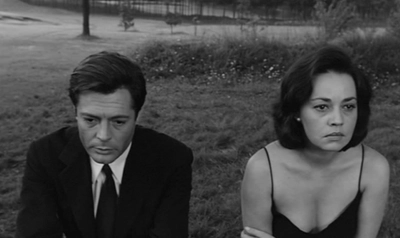
In this wide-ranging essay, Jungian analyst Gary D. Astrachan turns his attention to the cinema of Michelangelo Antonioni, one of postwar Italy's most influential filmmakers, and a director whose visual language is steeped in the imagery of landscape, alienation, and the quest to discern soul through the surfaces of the world.
Tracing a path through Antonioni's major films, the piece follows the director's recurring fascination with figures set against vast, often indifferent, natural and industrial terrains.
Astrachan writes in close intimacy with the films themselves, and the prose deliberately mirrors his subject's own unhurried, observational style. For readers unfamiliar with a particular film, the thirteen section headings follow Antonioni's films chronologically, and the essay is accompanied throughout by many beautiful stills from the films.
At its heart, this is an essay about the enduring landscape which silently holds all of our human dramas of love, loss, and the need to meaningfully connect to worlds both within and without.
'Figures in the Landscape' is the first chapter of four written so far for a book project concerning our relationship with landscape, nature, the environment and materiality in general, as seen through the lens of art, cinema, painting, and photography.
Additions to the Japanese section of the ARAS Permanent Collection!
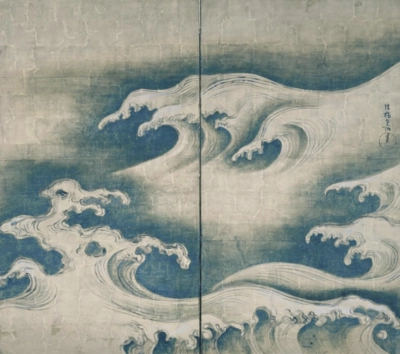
We are excited to present four new archetypal commentaries written by Dr. Nanae Takenaka. Her commentaries bring a deep scholarly perspective that illuminates the archetypes woven throughout these images and the Japanese culture. Contributions of this quality are invaluable to us. We invite you to explore them here or discover them in context within our archive.
View the images and read the archetypal commentaries here.
New Publication: The Art of the Self: The Blue Book of Eranos Founder Olga Fröbe-Kapteyn
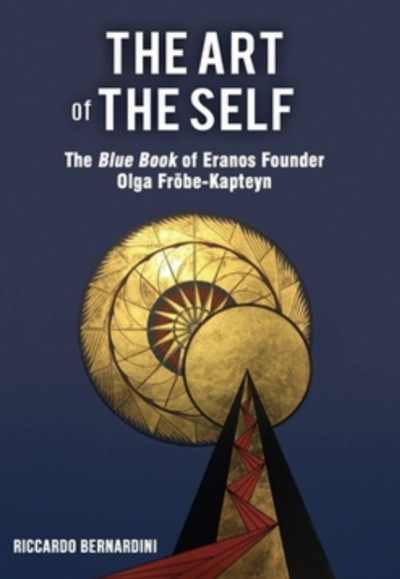
ARAS is pleased to call attention to a major new book on Olga Fröbe-Kapteyn (1881–1962), the visionary founder of the Eranos Conferences and, through Eranos, one of the founding mothers of ARAS itself. The Art of the Self: The Blue Book of Eranos Founder Olga Fröbe-Kapteyn, by Riccardo Bernardini, is the definitive study of Fröbe-Kapteyn's life and art, and the first book devoted to her extraordinary private corpus of visionary paintings known as the "Blue Book."
Bernardini, Scientific Secretary of the Eranos Foundation in Ascona, has spent over twenty years studying, restoring, and exhibiting the Blue Book, and draws on that long engagement to reconstruct Fröbe-Kapteyn's two creative periods: the "Meditation Plates" painted between roughly 1926 and 1934 during her collaboration with theosophist Alice Bailey, and the "Visions" drawn between 1934 and 1938, the years of her formative relationship with C.G. Jung. That relationship, the book shows, was instrumental in the creation of the Eranos Archive which Fröbe-Kapteyn founded to house and continue her own work in images and symbolism — the archive from which ARAS itself directly descends.
The volume includes a foreword by Fabio Merlini, an introduction by Murray Stein, and an afterword by Her Royal Highness Princess Irene of the Netherlands, along with appreciations from figures including Massimiliano Gioni (Artistic Director, New Museum and Fondazione Nicola Trussardi).
For those who have long wondered about the woman behind Eranos and behind the symbolic tradition of ARAS, this book is essential reading — and a fitting tribute to her legacy.
New Feature: Contemporary Symbolic Voices
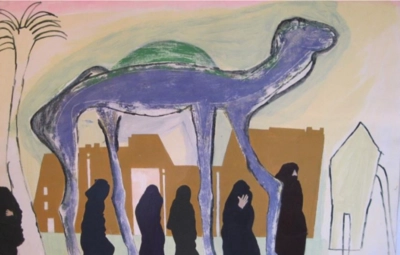
With this issue, ARAS Connections launches a new recurring feature, Contemporary Symbolic Voices, dedicated to artists working today whose art draws on the language of symbol and archetype.
ARAS has always understood symbols as living things and carriers of meaning that move across centuries and cultures, surfacing again and again in new forms. That movement hasn't stopped. Contemporary artists continue to use myth, dream, and archetypal imagery as tools for exploring identity, memory, and meaning.
In each issue, Contemporary Symbolic Voices will introduce a working artist whose imagery resonates with the archetypal traditions of ARAS.
In our first edition, we are excited to highlight artist Rochelle Shicoff as she explores the symbolic content of her series of paintings, After All the Leaves Have Fallen: Muslim Women and Their Traditions. Drawing on years living among Middle Eastern neighbors in Brooklyn and a formative journey through Egypt, Shicoff fills her canvases with camels, patterned textiles, and veiled figures - symbols of strength, modesty, and endurance that honor the women she came to know.
We hope this feature builds a bridge between the historical material in the ARAS archive and the artists actively extending that visual language now.
Contents
Become a Member of ARAS!
Your completely tax-deductible membership gives you:
- 18,000+ images and commentaries spanning human eras and cultures
- Our quarterly newsletter ARAS Connections: Image and Archetype
- Access to the Artstor Digital Library
Full access to the entire contents of the three magnificent ARAS books: An Encyclopedia of Archetypal Symbolism, The Body, and The Book of Symbols.
Join us on Patreon for more exclusive ARAS material:
At ARAS, we're dedicated to bringing meaning to the images that are all around us — through education, art-making, research, and public engagement. If that mission speaks to you, we'd love to have you alongside us. Join us on Patreon and support the work that makes it all possible. And we'll make sure it's worth your while.
Join us at Patreon.com/arasarchive and select Membership Options. From there you can scroll through the 6 options for membership - starting as low as $3/month.
We Value Your Ideas
As our newsletter grows to cover both the ARAS archive and the broad world of art and psyche, we're eager to have your suggestions and thoughts on how to improve it. Please send your comments to info@aras.org. We look forward to your input and will reply to every message.
Subscribe
If you're not already a subscriber and would like to receive subsequent issues of this newsletter by email at no cost, e-mail us at newsletter@aras.org.